Why Festival-Based Social Media Content Still Matters
2 months ago
Every year, Indian brands show up for festivals on social media. To an outside observer, these posts can feel routine or expected. But when viewed closely, festival-based content plays a deeper role in how brands build familiarity, relevance, and cultural presence over time.
Pongal 2026 offered a strong example of how brands across categories approached this moment. Without heavy promotion or campaign level spends, brands used social media festival post design to signal attentiveness, gratitude, and cultural alignment. For businesses planning their own content calendars, these posts serve as a useful example of social media posts that prioritise presence over performance metrics.
Rather than looking at individual creatives in isolation, it helps to understand the different approaches brands take while showing up for festivals.
Heritage Led Presence
_1769513391.jpeg)
Some brands naturally lean into heritage and tradition during festivals. Their creative choices feel familiar and comforting, drawing from shared memories, rituals, and visual cues that audiences instantly recognise.
Brands like Amul and Paper Boat follow this approach well. Their Pongal creatives reference local traditions, everyday food moments, and regional warmth without needing overt explanations. The design language stays simple and rooted, allowing the festival to lead the narrative rather than the brand.
This approach works especially well for brands with long-standing recall. By maintaining consistency year after year, these posts reinforce trust and emotional continuity. For businesses observing this, the takeaway is simple. Festival posts do not always need novelty. Sometimes, reliability is the strongest signal of relevance.
Product Led Cultural Alignment
_1769513410.jpeg)
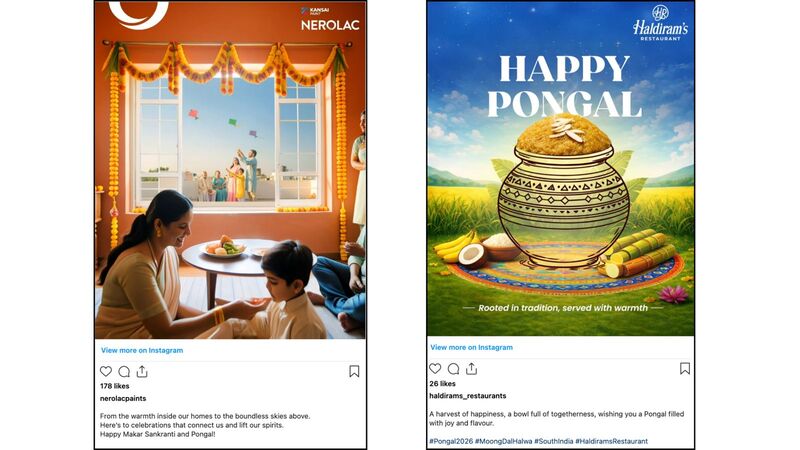
Other brands anchor their festival communication closer to the product while still respecting the occasion. The festival becomes a context rather than the story itself.
Haldiram’s and Nerolac offer good examples of this approach. Their Pongal creatives integrate product visuals naturally into festive settings. The message remains subtle and non-promotional, but the brand presence is unmistakable.
This type of festival social media campaign works well for brands that want to stay visible without breaking their core communication rhythm. The product remains familiar, but the surrounding cues shift to reflect the season. Over time, this helps brands feel timely without feeling opportunistic.
Emotion Led Storytelling
_1769513425.jpeg)
Some brands use festivals as moments to pause selling entirely and focus on shared human emotion. The creative intent here is less about what the brand offers and more about how it makes people feel.
Google India’s Pongal post reflects this direction. The creative taps into togetherness, gratitude, and everyday connections, allowing emotion to carry the message. The brand presence is quiet but powerful.
This approach shows that festival content does not always need explanation or product context. When executed thoughtfully, emotionally led posts help brands build long-term affinity. For businesses planning their social media festival post design, this reinforces the value of empathy and restraint.
Minimal Brand Cue Participation
A few brands choose to participate in festivals with minimal branding and clean visuals. The focus remains on acknowledgement rather than storytelling.
Wendy’s India and Pulse Candy reflect this lighter touch. Their creatives rely on simple visuals, brief messaging, and recognisable brand cues. The festival greeting feels like a check-in rather than a campaign.
This approach works particularly well on fast-moving platforms where attention spans are short. It reminds audiences that the brand is present and aware, without demanding engagement.
What Pongal 2026 Teaches Brands
Across these approaches, one pattern remains consistent. Brands that show up regularly for cultural moments stay top of mind. Festival posts may not always drive immediate engagement or conversions, but they contribute to cumulative brand recall.
Pongal 2026 serves as a useful example of how festival social media campaigns do not need to be complex to be effective. Whether heritage-led, product-led, emotion-driven, or minimal in execution, the act of showing up itself matters.
For brands planning their social media calendars, festivals should not be treated as optional fillers. They are cultural checkpoints that help audiences feel seen and understood. Over time, this consistency builds familiarity, trust, and relevance.
At Skillwise, we help brands plan social media festival post designs as part of a larger content ecosystem rather than as one-off creatives. Cultural moments are mapped early, aligned with brand voice, and designed to build long-term recall.
If you are looking to structure your festival content calendar with clarity and intent, our team of experts at Skillwise can help you get there.